Sacred Caves: Dunhuang Lands in Singapore
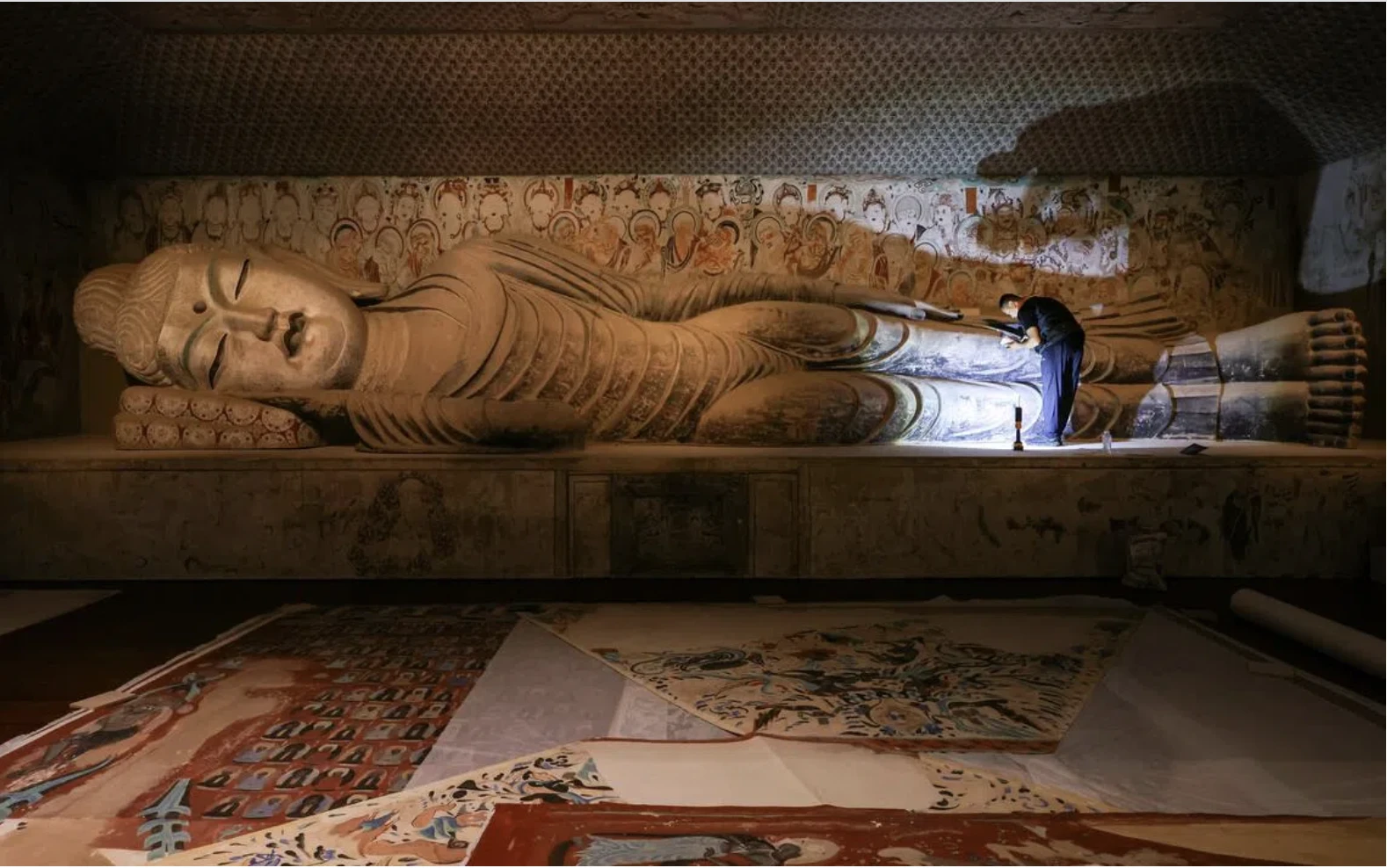
The Asian Civilisations Museum recreates four Mogao Caves, the great UNESCO-listed Chinese rock-cut site, and features a 13-meter reclining Buddha.
The Asian Civilisations Museum recreates four Mogao Caves, the great UNESCO-listed Chinese rock-cut site, and features a 13-meter reclining Buddha. An unprecedented sight in Southeast Asia, this exhibition offers a visitor-level narrative of sixteen centuries of Buddhist art along the Silk Road.
DUNHUANG (China) – On the lawn of the Asian Civilisations Museum (ACM), a six-meter-high inflatable structure holds its own against the surrounding trees. The figure has an angelic smile, drapery that seems to defy gravity, and the somewhat ethereal glow of a cartoon image. It is an apsara — one of those celestial creatures from the Buddhist pantheon, half-dancers, half-musicians, which texts associate with flowers and music. Where they pass, it is said, nirvana smells sweet.
These figures have come to be associated with Dunhuang, an oasis city in northwest China, situated at the edge of the Gobi Desert, and now one of the most popular destinations for Chinese domestic tourism.
A fragment of this arid city is now on display in Singapore. 'Sacred Caves: Dunhuang, Buddhism and the Silk Road,' organized in partnership with the Dunhuang Academy — the Chinese public institution that has overseen the site since 1944 — is announced as the largest presentation of Dunhuang's treasures ever held in Southeast Asia.
Four Life-Size Caves
The core of the exhibition: four caves reproduced to scale, which visitors can physically enter. Monumental sculptures, paintings from floor to ceiling, restored polychromy — the facsimiles recreate the experience of a sanctuary carved into the soft sandstone cliff, with its low-ceilinged corridors and dim light. Additionally, 22 original paintings and 47 objects are on loan for the occasion. The exhibition runs until March 7.

The Mogao Caves — nearly five hundred chambers carved into the face of the Mingsha Mountains, about twenty kilometers from the city — remain little known outside China. Their name roughly means 'the highest' or 'unequaled.' In scholarly circles, they have long enjoyed another reputation: housing some of the most eloquent Buddhist artworks in the world.
Sixteen Centuries of Commissions
The site is anything but an accident. Founded around 366 CE by a wandering monk, Yuezun, it was carved, repainted, and expanded for nearly a thousand years, fueled by donations from merchants, generals, and emperors. For Dunhuang was not the end of the world: it was the tollgate of the Silk Road, the point where caravans from Samarkand and Kashgar separated to bypass the Taklamakan, either to the north or to the south. Prayers were offered there for the success of the journey, before the dunes and mountain passes.
From this strategic position an unintentional museum was born: some 45,000 square meters of mural paintings, over 2,000 polychrome sculptures, and hundreds of manuscripts in Chinese, Tibetan, Sogdian, Uyghur, or Sanskrit. The 'Library Cave,' walled up around the 11th century and rediscovered in 1900, yielded a corpus that renewed the history of exchanges between India, Central Asia, and China — before most of these pieces made their way into European collections.
The Paradox of the Cliff
Listed as a UNESCO World Heritage site in 1987, Mogao today bears a burden that its patrons had not anticipated: its own success. The humidity from breaths, the light, the sheer passage of crowds attack millennia-old pigments. The Dunhuang Academy has therefore instituted visitor quotas, timed itineraries, and a vast digitization campaign — of which the facsimiles presented in Singapore are, in part, the culmination.
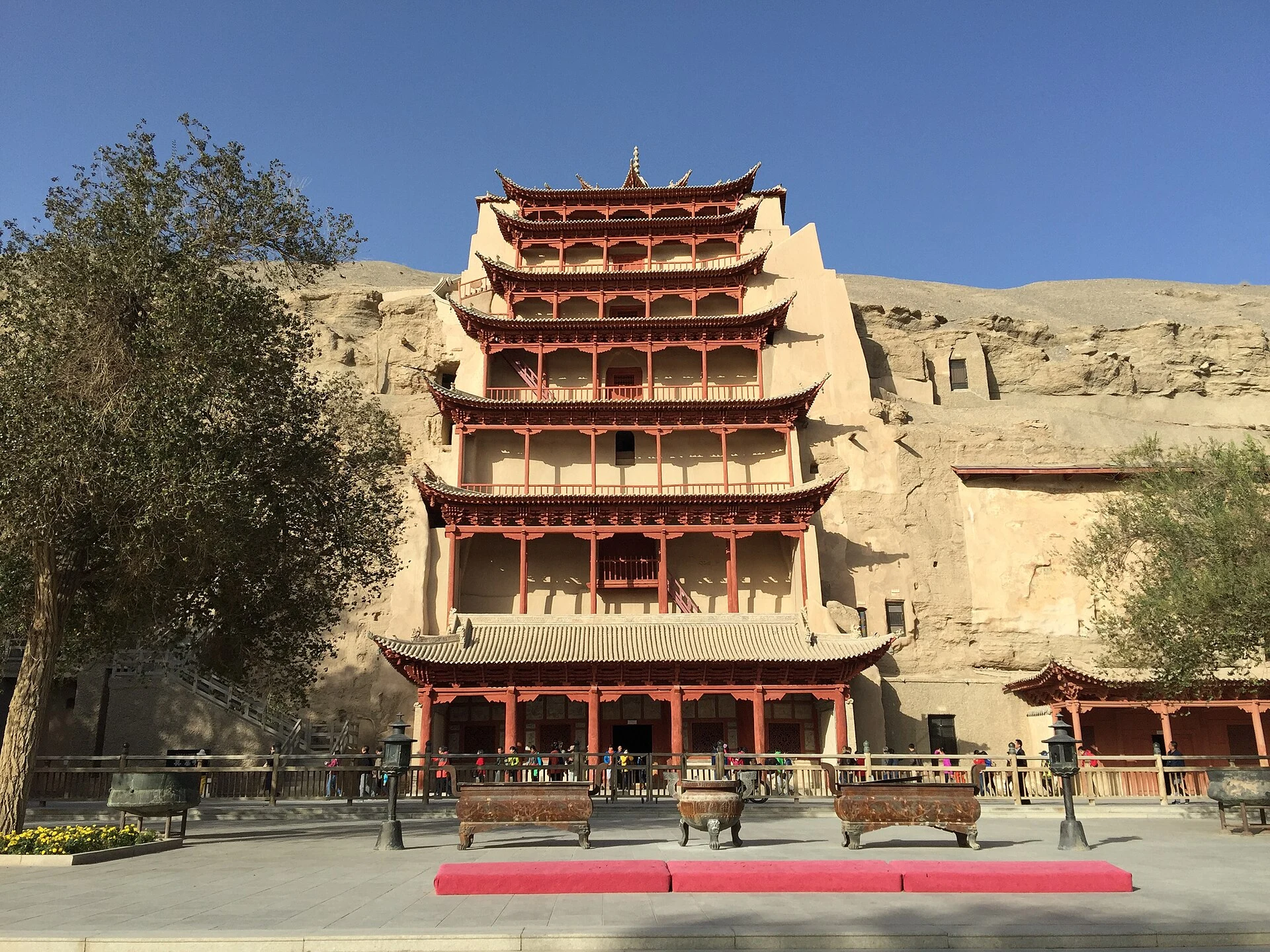
This is the whole point of the exercise: to see the caves without damaging them. And, for a Singaporean public more familiar with the maritime Silk Road than its terrestrial counterpart, to appreciate what the city-state owes to this corridor, and what Buddhism owes to a desert.
By Alain Delaporte-Digard