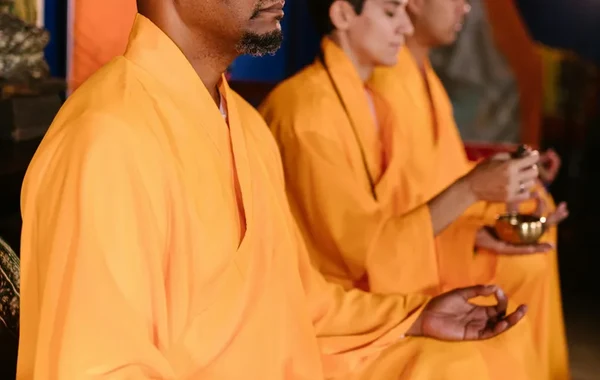

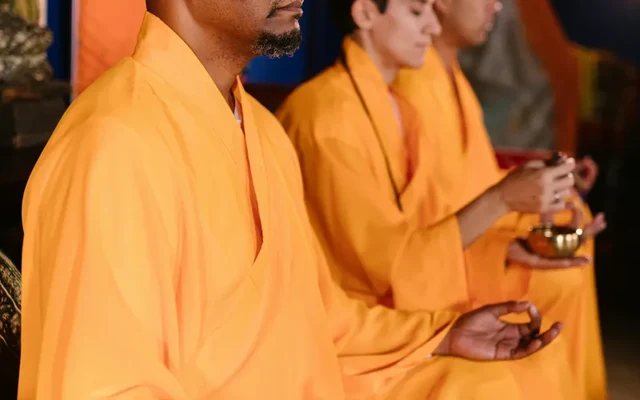
 1.1
Inner Peace
Taming anger, agitation, and suffering.
Cultiver la paix en soi, dans la société et avec le vivant
Explorer les enseignements bouddhiques et des initiatives concrètes pour construire un monde plus juste, plus pacifique et plus harmonieux avec tous les êtres vivants.

La paix et la non-violence sont au cœur des enseignements du Bouddha. Ce chemin nous invite à cultiver la paix intérieure, à transformer nos relations, à désamorcer les conflits et à contribuer à des sociétés plus justes, plus solidaires et plus respectueuses de tous les êtres vivants. Il relie sagesse bouddhique, éthique universelle, connaissances contemporaines et actions concrètes pour construire un avenir pacifique et durable.
1.1 Taming anger, agitation, and suffering.
 1.2
Mindful communication, listening, and reconciliation.
 1.3
Living together, preventing conflict, and strengthening cohesion.
 1.4
Human rights, social justice, and ethical governance.
 1.5
Respect for every creature, compassion, and interdependence.
 1.6
Dialogue, cooperation, and disarmament.
 1.7
Transmitting a culture of peace from the earliest age.
 1.8
Initiatives, networks, and movements for a calmer world.



Une exploration complète des textes anciens et contemporains pour comprendre la paix et la non-violence dans la vision bouddhique et dans le monde d'aujourd'hui.
Voir le dossier de référence →In Buddhist thought, non-violence (Ahiṃsā / Avihiṃsā) is more than passive abstention from harm. It flows from understanding the deep interdependence of all beings and is rooted in active loving-kindness (Mettā) and compassion (Karuṇā).
Source : Dhammapada, chap. X · Danda VaggaInner peace is trained through mindfulness (Sati), non-judgmental awareness of difficult emotions, and gentle breath awareness so we respond consciously rather than reacting out of irritation.
Source : Vitakkasaṇṭhāna Sutta (MN 20)No. In the Cakkavatti-Sīhanāda Sutta (DN 26), the Buddha connected inner transformation to social and economic fairness: lasting peace requires just social structures that care for the vulnerable.
Source : Cakkavatti-Sīhanāda Sutta (DN 26)Without naivety and without mirroring hatred. The Simile of the Saw (MN 21) teaches protecting victims and upholding justice while refusing to let hatred darken our own clarity.
Source : Kakacūpama Sutta (MN 21)Buddhist history includes Ashoka's edicts of tolerance, Maha Ghosananda's Dhammayietra peace walks in Cambodia, Thich Nhat Hanh's Engaged Buddhism youth work, and modern peace mediation networks worldwide.
Source : Histoire du bouddhisme engagé & Archives Buddhachannel